SOMATIC MOVEMENT FOR WELL-BEING, CREATIVITY, AND RESILIENCE
Yielding
Somatic series
2026
My first somatic-informed class was a disaster.
It was in 2012, in downtown Shanghai—a class highly recommended by artist friends. By then, I had been dancing for more than two decades. I had also been practicing capoeira for three years—a leap out of my comfort zone in itself. But this session, fusing Chinese qigong with dance improvisation, disoriented me completely. There was no feedback from a teacher or a mirror. I moved in response to verbal prompts and the movements of others. I had no idea what I was doing or whether I was doing it well, badly, or at all. It felt like moving blindfolded. In despair, I tried to catch glimpses of myself in the thin mirror strips decorating the walls. Those scattered reflections were the only anchors I could moor myself to. After the session, I briefly thanked the teacher and rushed outside, convinced it would be my last first time ever.
Six months later, I joined my first Vipassana retreat. I came hoping to deal with the focus problems that had emerged amid the intensity of my MA studies, work, and multiple projects. The rigorous meditation schedule forced me to slow down and turn my attention inward. There, I encountered a vast terra incognita—my own body. Ten intense days, with up to eleven hours of meditation daily, shifted my attention from the visual to the haptic. They revealed a realm I had long assumed I understood and controlled, yet knew almost nothing about. Like Alice, shrinking and growing to pass through the door into the garden, I had to cultivate awareness in stillness before I could make sense of my experience in that class. From there, I stepped into somatic movement—like entering a rabbit hole where each discovery leads to many more.
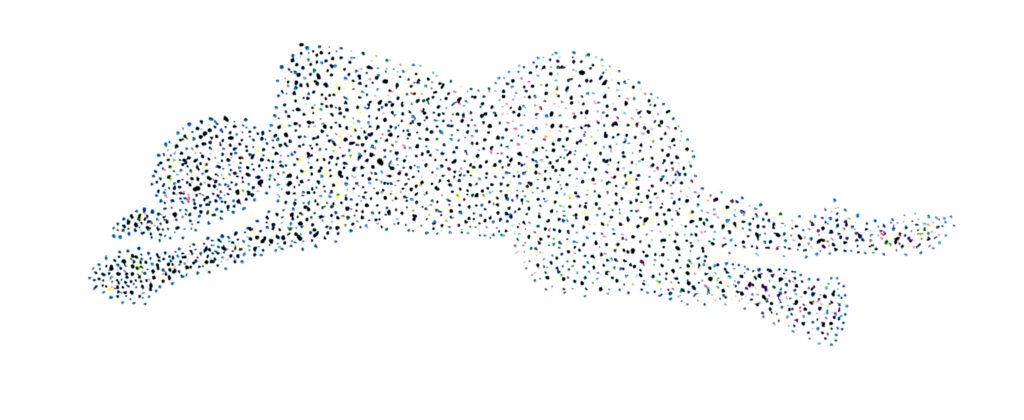
Yielding #4
Somatic series
2026
There is ongoing debate about which practices belong under the umbrella of somatic movement. However, there is one simple threshold that helps exclude what does not. If a practice allows you to perceive and direct movement from within—without relying on mirrors or on the real or imagined gaze of a teacher, partner, or audience—then it is somatic.
This shift—from moving an imagined body to experiencing a living one—changes many things. It restores agency in practice. It helps protect the body and reduces constant dependence on external feedback or correction. It allows you to notice subtle signs of fatigue, misalignment, or distress before they become injuries. It also softens the pressure to conform. Instead of forcing the body into an ideal shape, you begin to recognize its unique capacities and limits. Responsibility for practice becomes grounded not in guesswork, but in the rich flow of sensory information from the body itself. From there, deeper learning becomes possible.
Somatic awareness opens a way to study how the body actually lives and moves: how tissues and systems interact, how they support or restrict movement, and how patterns develop over time. It helps reveal personal movement habits—and sometimes to reshape them when they no longer make sense. It also sharpens awareness of rhythms: the rhythms of effort and rest, of growth, fatigue, and recovery, and how these change with age and environment. At a deeper level, somatic practice raises another question: what moves us? What intentions, fears, or desires initiate movement—or prevent it? With time, this knowledge allows movement to be navigated more skillfully, like an experienced helmsman steering a sailboat—harnessing the wind rather than fighting against it.
Fourteen years of exploring somatic practices have gradually unblinded my relationship with my body, bringing to light both its pains and its possibilities. This journey helped me recover from two major injuries and endure two and a half years of chronic pain. It gave me the confidence to explore new movement practices such as Thai boxing and acrobatics, and eventually to return to traditional dance forms after years devoted to contemporary techniques and improvisation. Somatic movement also became the subject of both my master’s theses. Its history, diversity of methods, and conceptual depth continue to spark my curiosity.
What started as a confusing class in downtown Shanghai turned out to be far more than a relaxation or mindfulness technique. It revealed itself to be a multilayered framework for understanding movement, creativity, and life itself. Fourteen years later, I feel grateful that I stepped into that rabbit hole.
Below are some of the benefits this journey has offered me. Perhaps a few of them will spark your curiosity to explore somatic movement for your own well-being, creativity, and resilience.
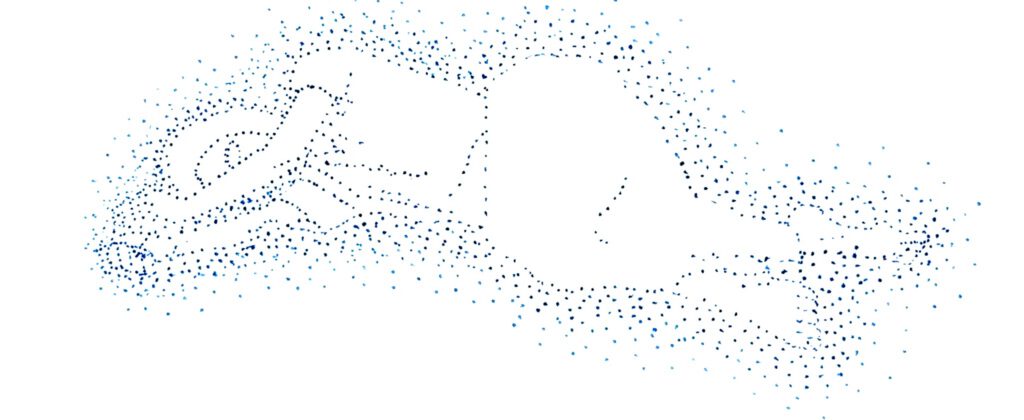
Yielding #5
Somatic series
2026
Enhance perception and creativity
A richer sensory awareness helps you notice subtle possibilities, break habitual responses, and explore new ways of moving, thinking, and creating.
Turn repetition into discovery
Instead of mechanically repeating an exercise, each repetition becomes a chance to notice something new and refine how you move or act.
Develop your own inner feedback
You learn to evaluate what you are doing from within, rather than relying only on corrections from teachers, coaches, or audiences.
Protect your energy and body
Greater awareness helps you notice fatigue, misalignment, or tension early, reducing the risk of injury and burnout.
Sustain your practice over time
By balancing ambition with well-being, you can keep learning and creating without exhausting yourself.
There are different somatic movement practices, each with its own language and perspective. Some approach the body through experiential anatomy. Others emphasize patterns of connectivity, or explore movement through poetic imagery. None of them claim to be the only way. Each offers a different lens, revealing new layers of how we move and perceive. There is no perfect place to begin—and no single path that suits everyone. But starting anywhere matters, as long as it sparks curiosity or brings a sense of enjoyment. From there, each door opens into many more.
HAPTIC FLOW
stories about dancing